

Cineteca Madrid dedicates its May program to documentary cinema and the forms of the real
- Memories of the Syrian Revolution' offers an approach to one of the 21st century's most complex conflicts through two recent documentaries.
- 'Images Against Oblivion' pays tribute to filmmaker Concha Barquero through a program focused on archives and memory.
- 'I Sing to Difference' brings together works by Latin American female filmmakers exploring identity, territory, and resistance.
- The program includes cycles on direct cinema, Spain’s recent history, and community.
Cineteca Madrid, a space within the Department of Culture, Tourism and Sport located at Matadero Madrid, dedicates its May programming to documentary cinema and the forms of the real, in dialogue with the celebration of the 23rd edition of Documenta Madrid. The cycles that make up this month's schedule share a common concern: the image as a tool for understanding the present, revisiting the past, and observing the mechanics of contemporary societies.
Much of the programming in May is rooted in the documentary field—not merely as a record of reality, but as a form of thought capable of questioning the world from multiple perspectives. From institutional portraiture to historical archives, and from political memory to new forms of community, the program proposes a broad view of the various ways to film the real.
Frederick Wiseman Retrospective
Over more than six decades, Frederick Wiseman (1930–2026) filmed the institutions that organize the collective life of Western democracies—hospitals, schools, prisons, public administrations, and cultural spaces—with patient and meticulous attention.
Far from any explanatory or didactic intent, he developed a method based on direct observation, editing, and duration, where images become the primary instrument of knowledge. His cinema occupies a unique territory, halfway between documentary, essay, and a form of "thinking in images."
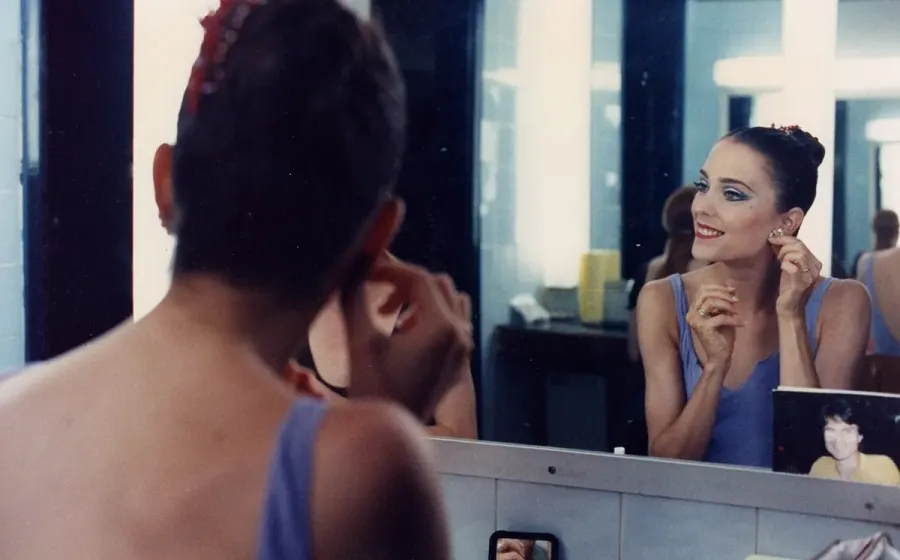
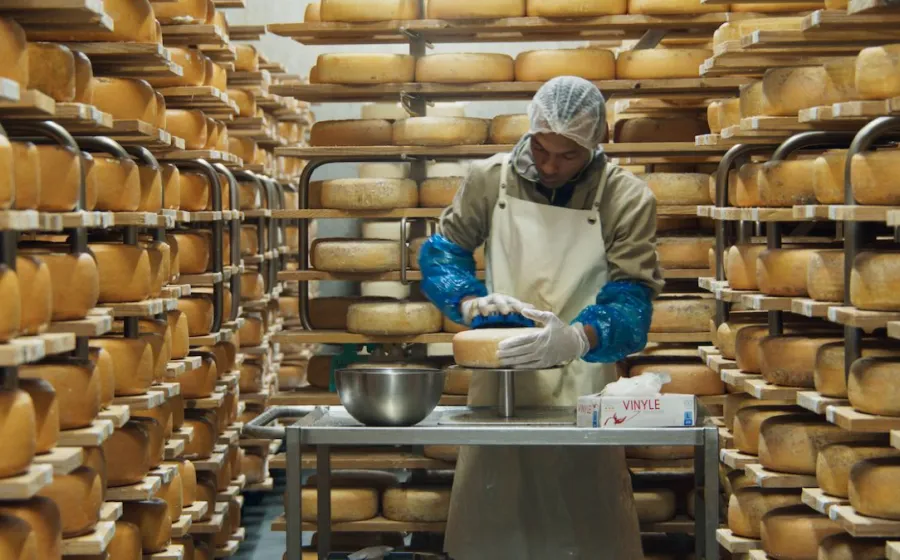
The journey proposed by Cineteca Madrid traverses distinct stages of his filmography, from his first and controversial feature, Titicut Follies (May 5), to Menus-Plaisirs – Les Troisgros (May 17), where his gaze settles on the precise craft of a restaurant. In between, titles such as Welfare (May 7), High School (May 8), Central Park (May 9), At Berkeley (May 10), Ballet (May 14), The Store (May 15), and City Hall (May 16) compose a vast portrait of contemporary life and the ways institutions shape collective experience.
‘Memories of the Syrian Revolution’
This two-session program approaches one of the 21st century’s most complex and devastating historical processes—the Syrian revolution—through two key works of recent documentary cinema. The selected films address the traces of war in daily life and the persistence of trauma from intimate, fragmentary perspectives, far removed from simplified media narratives.
Screenings of 5 Seasons of Revolution (2023) and My Memory Is Full of Ghosts (2024), on May 5 and 6 respectively, will be accompanied by presentations from Justine Pignato, a researcher specializing in contemporary Syrian documentary film, who will provide keys to contextualizing these works and opening a space for shared reflection on images of the revolution and their resonance in other present-day conflicts.
‘Images Against Oblivion’: The cinema of Concha Barquero and Alejandro Alvarado
The cinema of Concha Barquero and Alejandro Alvarado belongs to a documentary tradition that views the archive as a contested territory. Their films work with found footage, voices, and fragments that are reorganized to challenge official narratives and reactivate silenced memories.
This cycle, conceived in memory of Concha Barquero (1975–2025), brings together some of their most significant works, including Pepe el andaluz (May 12) and Caja de resistencia (May 13), which explore the relationship between historical research and cinematic creation. Through these cinematic devices, the spectator is invited to occupy an active role in the reconstruction of the past and to reflect on the role of images in the construction of collective memory.
‘I Sing to Difference’: Latin American female filmmakers
Borrowing a famous line from Violeta Parra, this cycle brings together three sessions dedicated to Latin American female filmmakers, aiming to draw an arc between different generations and historical contexts. Far from a linear reading, the films presented relate different ways of addressing identity, territory, and resistance.
From documentary and experimental practices developed in often precarious or peripheral contexts, these works construct their own languages to reflect on the "common" and the "political." The program proposes a dialogue between past and present through the 1980s film Bordando la frontera (May 22) by Ángeles Necoechea; the film Hoy partido a las tres (May 23) by contemporary filmmaker Clarisa Navas; and a session of recent short films screening on May 24. The sessions will be accompanied by a lecture by curator Karina Solórzano, a researcher and programmer specializing in Mexican and Latin American cinema.
Pioneers of Direct Cinema
In the early 1970s, a group of American filmmakers transformed the documentary through technical innovations and a desire to change how the world was filmed. The emergence of lightweight cameras and synchronized sound allowed events to be recorded from within the action, dispensing with the traditional narrator.
On May 19 and 20, this cycle brings together two films by Jane Weiner (A Camera That Goes Anywhere and Ricky on Leacock) that reconstruct this historical transformation and its consequences for cinematic language, offering insight into the origins of a filmmaking style that continues to influence contemporary cinema.
Reflections on the Spanish Transition
This program offers a look at Spain's recent history through a selection of films that reflect on political memory, collective processes, and social imaginaries. From the years of the Transition to contemporary crises, the selected works explore the tensions between citizenship, participation, and social transformation.
On May 2 and 3, Cineteca Madrid will screen the diptych Informe general by Pere Portabella. Filmed on the threshold of the Transition (1976) and revisited over 30 years later in a context of economic crisis and institutional disaffection (2015), Informe general assays an open form of cinema through conversations, meetings, and heterogeneous materials.
On May 2, El futuro (2013) by Luis López Carrasco will screen, reconstructing a youth party on the night of the 1982 socialist victory. The imagined archive becomes a critical tool for reflecting on the imaginaries of an era. Finally, on May 3, VidaExtra (2013) by Ramiro Ledo shifts the reflection on the crisis and the 15M movement into the present. Halfway between essay and fiction, the film explores the tensions between daily life and political action, between precarity and the desire for transformation.
Documenta Madrid Festival
The 23rd edition of Documenta Madrid takes place from May 26 to 31 under the philosophy of ‘Taking the Pulse’—an invitation to re-observe our surroundings and understand the social processes that shape contemporary life. Inspired by the gesture of filmmakers like Pier Paolo Pasolini, who filmed the streets of Rome to understand his time, the festival proposes recovering diverse gazes capable of interpreting reality from different contexts.
Documenta Madrid also turns its gaze toward the unknown Slovenian experimental cinema, which sought to show its resistance to the regime from the margins of artistic practice. The festival will also review the unreleased work of television correspondent José Luis de Pablos, who aimed to bear witness to everything he saw that did not make it into the news. For this reason, Documenta Madrid has commissioned Juan Cavestany—one of the filmmakers who best understands the city of Madrid—to portray the space of Matadero Madrid and Cineteca Madrid, showing all the life that bustles within its surroundings. Above all, this edition aims to demonstrate that hosting a festival means committing to a diversity of gazes, origins, backgrounds, and sensibilities.