



Cineteca Madrid proposes regaining the capacity to be moved in the face of digital desensitization
A retrospective on Masao Adachi offers an in-depth look at the universe of one of the most radical and unclassifiable filmmakers in the history of Japanese cinema.
The work of artist Tav Falco is also captured in a retrospective that traverses his major aesthetic and thematic obsessions.
The Focus on Milagros Mumenthaler will bring viewers closer to a form of storytelling free from narrative structures, centered on the sensory, intuition, and memory.
Within the framework of Pride 2026 celebrations, Cinema Pride reinforces the commitment to diversity, visibility, and the defense of LGBTI rights through film.
Fernando Merinero’s trilogy Caseros e inquilinas is part of this June’s premiere slate, sharing an urgency to confront reality head-on.
ECAM Forum celebrates its third edition at Cineteca Madrid with key meetings to boost independent cinema and emerging talent.
Cineteca Madrid, a space belonging to the Department of Culture, Tourism and Sport located at Matadero Madrid, has set out this June to confront digital desensitization, creating a space for reflection at the initiative of Colectivo Laberinto, with cinema as an act of resistance. Raw, dissident, and profoundly human films suggest empathy as a way to flee from the cynicism that often surrounds us.
The cycles that make up this month’s lineup share a common commitment to proposing the cinematographic universe as an instrument to intervene in reality, rather than serving as a simple reflection of it, as practiced by filmmaker Masao Adachi. Likewise, the lineup will showcase films that move away from conventional narrative structures to delve into the intuitive, the sensory, or the diverse, as seen in the Milagros Mumenthaler retrospective or the films programmed in the Cinema Pride cycle.
'Laberintos' Cycle
Faced with digital desensitization, the 'Laberintos' cycle, curated by Colectivo Laberinto (Itzan Escamilla and Miguel Morillo), proposes a space for reflection and critical analysis through seven films that recover the figure of the voyeur to ask what it means to be a "peeper" (mirón) today. It is not about observing with impunity from a distance, but about engaging with what one watches. These works—raw, dissident, and profoundly human—confront the viewer with shocking narratives that are not residual stimuli, but realities that demand empathy, thought, and emotion; cinema as an act of resistance that forces us to inhabit the space of the "other" and to recover the capacity to be moved by the rawness of the real.
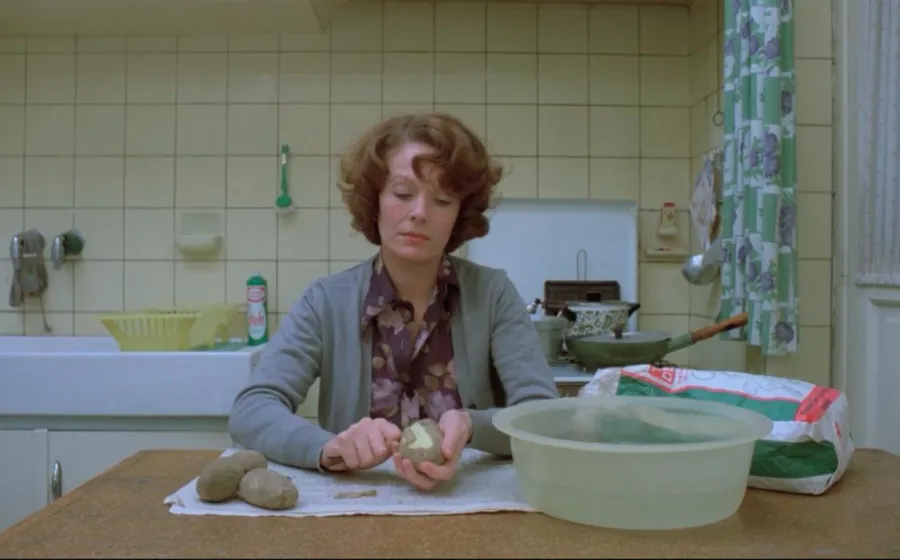
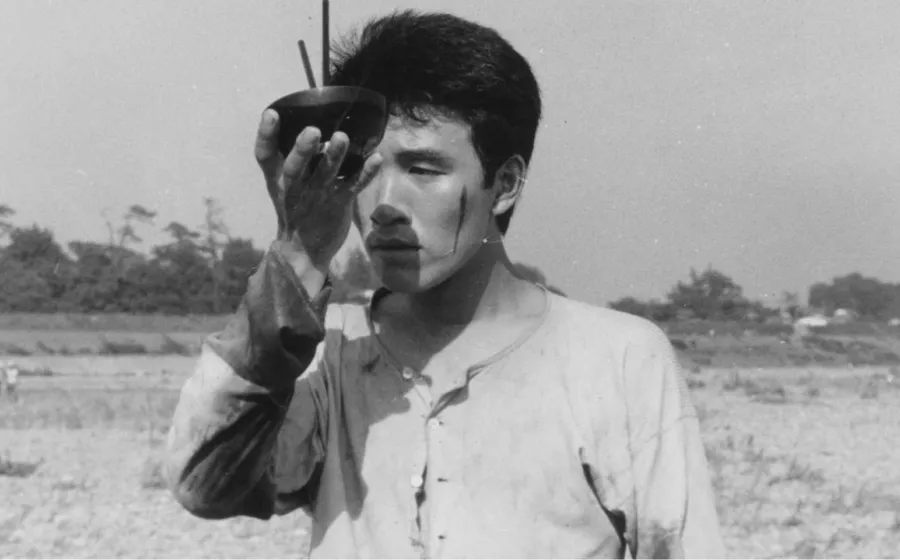
With the presence of Itzan Escamilla and Miguel Morillo (Colectivo Laberinto), the cycle includes the films Irma Vep by Olivier Assayas (June 12); Jeanne Dielman, 23 Quai du Commerce, 1080 Bruxelles by Chantal Akerman (June 14); Animal Love by Ulrich Seidl (June 16); Benny's Video by Michael Haneke (June 18); Love Exposure by Sion Sono (June 21); Tras el cristal by Agustí Villaronga (June 23); Funeral Parade of Roses by Toshio Matsumoto (June 24); and The Red Spectacles by Mamoru Oshii (June 25).
Masao Adachi Retrospective: Cinema and Revolution
Taking advantage of the premiere of Escape, the new film by Masao Adachi, within the framework of Filmadrid, this retrospective offers the opportunity to delve into the universe of one of the most radical and unclassifiable filmmakers in the history of Japanese cinema. Director, theorist, and militant, Adachi has dedicated his life to merging cinematographic practice with political action, proposing cinema not as a reflection of reality, but as an instrument to intervene in it.
In his youth, he used low-budget erotic cinema as a vehicle for formal invention and provocation and collaborated with filmmakers like Kōji Wakamatsu and Nagisa Ōshima on films critical of capitalist modernity that reveal the ravages of power and oppression. In 1974, he left cinema to join the Palestinian liberation struggle, remaining in the Middle East for over two decades until his extradition to Japan in 2000. After a 30-year hiatus, he returned to filmmaking with works that portray political commitment from a biographical perspective, responding directly and urgently to political events.
This program, curated in collaboration with Go Hirasawa, explores the different stages and genres the filmmaker has traversed throughout his career, with radical and provocative titles such as Abortion (June 16), Female Student Guerilla (June 18), AKA Serial Killer (June 24), and Prisoner/Terrorist (June 25). All sessions will include video presentations by Masao Adachi.
Tav Falco Focus: Cinema as Conjuration
Tav Falco’s work resists any attempt at categorization. A disciple of William Eggleston and founder of the cult band Tav Falco's Panther Burns, his universe moves without hierarchies between performance, photography, music, and cinema. This retrospective is a journey through his major aesthetic and thematic obsessions: black and white as spectral memory, expressionism, a magnetism for the decadent and the marginal, and a relationship with music that is no longer a soundtrack, but the very substrate of the image.
The survey of this total, non-conformist, and vibrant artist’s work includes, as a highlight on June 20, The Urania Trilogy (2024), his first feature film. Shot on 16mm, the film recreates the aesthetic of silent cinema and the atmospheres of old Europe to tell the story of Gina Lee, a disillusioned young American who travels to Vienna and becomes embroiled in the search for buried Nazi treasure. This session will feature the presence of Tav Falco.
Milagros Mumenthaler Focus
Few contemporary filmmakers have gifted the public a relationship with the image as free, intuitive, and powerful as Milagros Mumenthaler. Throughout her career, she has tirelessly expanded the possibilities of the image, liberating it from conventional narrative structures to bring it closer to the sensory, to intuition, and to memory. Her films have left us with some of the most unforgettable images in recent cinema: suspended moments, minimal gestures, bodies, silences, and landscapes that resonate beyond the narrative. Las corrientes (June 5), La idea de un lago (June 10), and Abrir puertas y ventanas (June 11) are part of the sentimental education of much of the contemporary cinephile community, having become essential titles in the cinema of the last few decades. In addition to this retrospective of three of her feature films, organized by ECAM Forum and Filmadrid, the filmmaker will host a masterclass on Thursday, June 11.
Cinema Pride 2026
Within the framework of Pride 2026 celebrations, Fundación Triángulo, in collaboration with QueerCineMad and Cineteca Madrid, presents a new edition of Cinema Pride, a cycle that reinforces institutional commitment to diversity, visibility, and the defense of LGBTI rights through film.
This year's programming includes international premieres arriving in Madrid after their run at various festivals: Tal vez by Arima León (June 2); Este cuerpo mío by Afioco Gnecco and Carolina Yuste (June 3); and Iván & Hadoum by Ian de la Rosa (June 4), winner of the Teddy Award at the Berlinale. Furthermore, the cycle incorporates an outstanding selection of contemporary Taiwanese queer cinema, with titles such as Second Round by Kuan-Chun Chen (June 2); Blind Love by Julian Chou (June 3); and See You by Han-Ting Yu (June 4), which bring the viewer closer to new narratives and sensibilities.
Filmadrid: Smart7
In collaboration with Filmadrid, Cineteca Madrid hosts the Smart7 initiative once again, a window for discovering emerging European filmmakers who seek new ways to tell stories and expand the audiovisual language. The program (from Friday, June 5 to Sunday, June 14) consists of seven films chosen by Filmadrid and the other members of the Smart7 European festival association. Titles hosted by Cineteca include No Ghosts on Good Street by Emi Buchwald (Poland, June 5); Patty Is Such a Girly Name by Giorgos Georgopoulos (Greece, June 6); and Eternal Flame by Pedro Ramalhete (Portugal, June 7).
Summer in Japan with the Family
Cineteca welcomes the holidays with three essential films by animation masters: Recuerdos del ayer by Isao Takahata, co-founder of Studio Ghibli (Sunday, June 7); Summer Wars by Mamoru Hosoda (Sunday, June 14); and El recuerdo de Marnie by Hiromasa Yonebayashi (Sunday, June 28). Three journeys through childhood, love, and the bonds that intertwine and sustain us during the endless afternoons of summer.
Premieres
As every month, Cineteca Madrid brings an important slate of premieres to its schedule. This June, there will be seven surprising proposals that share the same urgency: to look head-on at what constitutes us.
In Una película de miedo by Sergio Oksman, a father and his son face inherited fears in an abandoned hotel in Lisbon (June 5–23). ¿Qué te dice esa naturaleza? is the return of acclaimed Korean director Hong Sang-soo, who follows a young poet crossing the threshold of adult hypocrisy between banquets and conversations (June 5–24). El príncipe de Nanawa by Clarisa Navas is an epic coming-of-age film shot over ten years on the border between Argentina and Paraguay, which won the Grand Jury Prize at Visions du Réel (June 19–28) and participated in Documenta Madrid 2026.
Additionally, Divino tesoro (June 19), Edipo esclavo (June 20), and Cupido confuso (June 27) make up the trilogy Caseros e inquilinas, by Fernando Merinero, a naturalistic triptych about the contemporary family that strips away the deception of appearances.
ECAM Forum: The State of Things
ECAM Forum 2026 will return to Cineteca Madrid from June 9 to 11 as one of the key meetings for boosting independent cinema and emerging talent, with a program that will bring together creators, producers, and industry agents for project presentations, pitch sessions, professional roundtables, and networking spaces.
Driven by the ECAM, the forum will once again position itself as a strategic platform for the development and international projection of new audiovisual voices, fostering dialogue, collaboration, and access to opportunities in a dynamic context that makes Madrid a reference point for the sector.