


Essayist McKenzie Wark to reflect on how to escape dominant technologies at Medialab Matadero
The fifth edition of the collaborative research laboratory LAB 5 opens a debate on how technologies reshape our understanding of what is real and what is credible
The Collaborative Prototyping Laboratory (CPL) is currently underway, developing the prototypes selected through an international open call
The outcomes will be shared with the public at the OpenLAB festival, featuring presentations, talks, and lectures
Running in parallel at Matadero’s Nave Una until 13 December is the group exhibition The Mechanics of Truth
Medialab Matadero, a programme of Madrid City Council’s Department of Culture, Tourism and Sport, is hosting the Collaborative Prototyping Laboratory (CPL) until 25 November—the core activity of its annual thematic programme LAB 5: The Mechanics of Truth. Its conclusions will be presented from 26 to 28 November at OpenLAB, the closing event where the research outcomes will be shared with the public.
Curated by Bani Brusadin, LAB 5 has been focusing since last May on one of the defining questions of our time: how rapidly accelerating technological processes are transforming the way we understand what is real and what is credible. The programme starts from a deeply topical premise: we live in an era in which images, narratives, data, and interfaces not only describe the world, but also construct, distort, or even confound it. Faced with this landscape, LAB 5 brings together artists, designers, researchers, journalists, technologists, and scientists to explore how truth, falsehood, and that “grey zone”—where facts lose ground to seduction, fiction, or manipulation—are produced today.
The Passenger: Lecture by McKenzie Wark
On 20 November at 7:00 pm, essayist McKenzie Wark will deliver the lecture The Passenger, a special preview event ahead of the OpenLAB programme. Wark will present in Spain for the first time the ideas explored in her upcoming book of the same name, set to be published in 2027 by the landmark American press Semiotext(e).
“Our devices—the phone in our hand, the laptop on our knees—turn us into passengers in our own lives: we are not the ones driving, and whoever is behind the wheel seems to have fallen asleep. We thus watch the crash of history on video, in slow motion and live.” So begins Wark’s talk, blending theoretical reflection with the literary sensibility characteristic of her autofictional works. “When we read the screen, the screen reads us,” the author adds.
Yet critiquing the end of writing in the age of chats, stories, and reels is only the starting point. Can writing break through interfaces to generate new forms of common, shared reality? McKenzie Wark speaks of two processes she terms ficting and facting, which are, in fact, inseparable. Every attempt to stabilise a fact passes through fictions; every attempt to imagine a fiction is always entangled with facts. Once we have this dual concept of ficting and facting—the essayist argues—we can begin to imagine how to build new media for another way of living together, or, in the author’s words, “new assemblages—autonomous, autopoietic, and self-correcting—of human and non-human agents.”
McKenzie Wark is a pioneer in critical thinking on the power of networks, new vectors of class, and forms of cultural resistance against toxic technological imaginaries. She is internationally renowned for her philosophical essays and works in which biographical experiences give rise to theoretical reflection. Her books include the classics A Hacker Manifesto (2004) and Gamer Theory (2006), alongside more recent titles such as Sensoria (2020), Reverse Cowgirl (2020), Raving (2023), and Love and Money, Sex and Death / Life Story (2026), most of which have been translated into Spanish.
Collaborative Prototyping Laboratory (CPL)
The Collaborative Prototyping Laboratory is one of the central activities of the annual LAB 5 programme, bringing together Medialab’s core lines of work: experimentation with emerging technologies, research into their social impact, and the fostering of collective intelligence through collaborative methods.
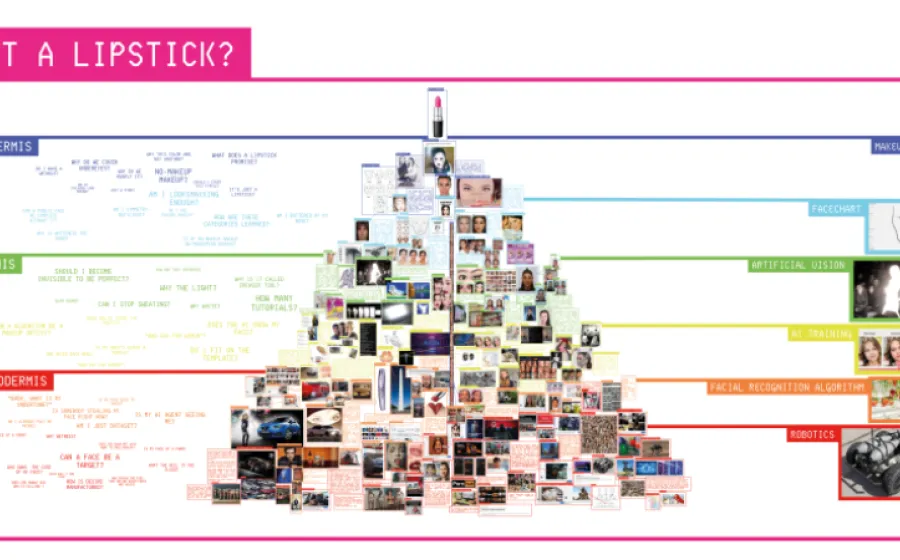
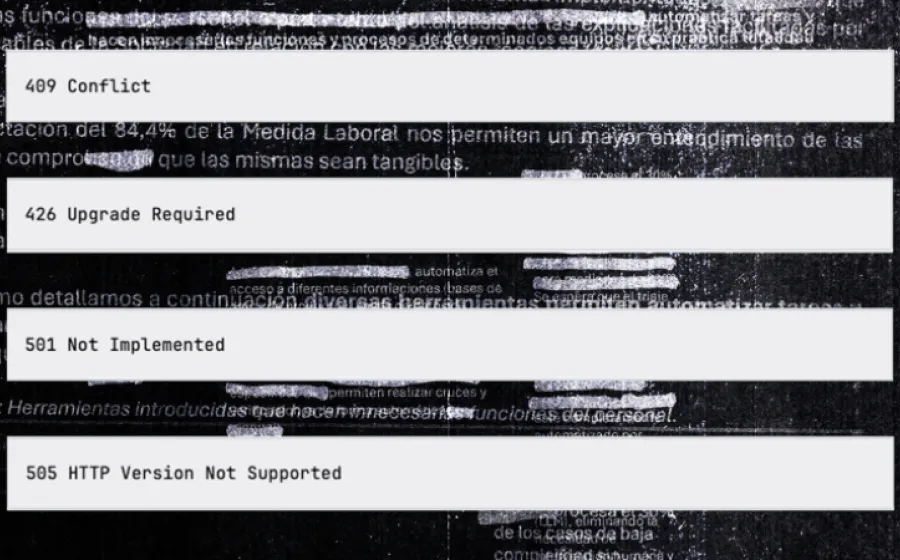
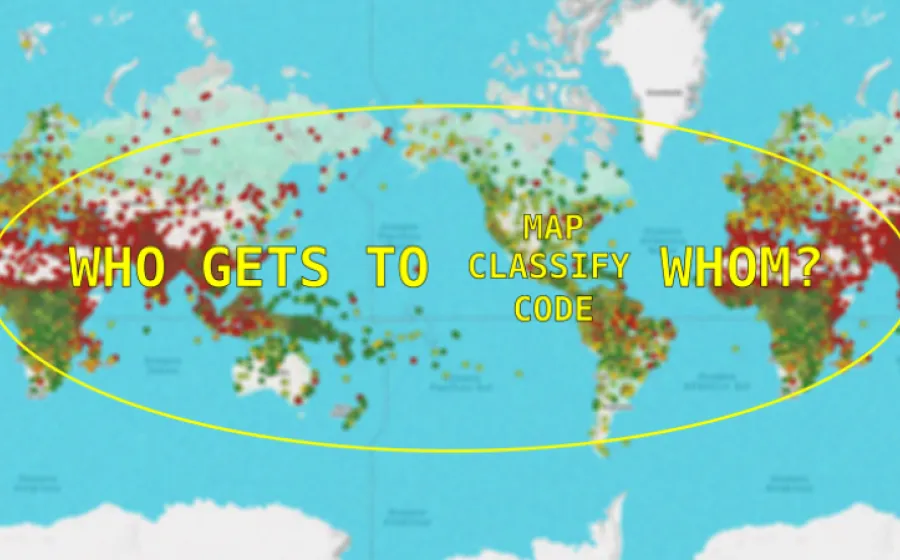
Over two weeks, from 12 to 25 November, twenty-five creators selected via an international open call will work together to develop the five chosen prototypes: The Conversion Code, proposed by Amanda Klajner (United Kingdom); Status Code: 409 Conflict, by Irene Pietrella (Barcelona); Cute & Fake, by Weijia Zhu (China); Just a Lipstick, by María Lara and Teresa Díez (Madrid); and Seeder, by Freddie Sanders (United Kingdom).
They are supported by three internationally acclaimed specialists: in spatial visualisation and experimental interface design, Italian artist, architect, and researcher Lucia Rebolino; in digital subcultures and aesthetics, Austrian scholar Sophie Publig; and in algorithmic environments and investigative data aesthetics, counter-forensic designer Júlia Nueno Guitart.
The CPL outcomes will be presented from 26 to 28 November at OpenLAB, the final event where the research findings will be shared with the public.
OpenLAB Festival
Throughout the year, LAB 5: The Mechanics of Truth has explored the technological production of the real: how facts are assembled, how belief is manufactured, how perception comes under constant pressure, and how models and simulations can either manipulate it or come to its rescue. OpenLAB brings this journey to a close.
Over three days of lectures and project presentations, audiences will find all of Medialab’s lines of work and research developed over the past year gathered in a single event. Invited artists, technologists, and thinkers will demonstrate how artistic research and alternatives to the commercial mainstream make it possible to address these issues in original, groundbreaking ways.
Guest speakers include writer Marta Peirano (Madrid), physicist and cultural agitator Wassim Alsindi (Iraq/United Kingdom), and digital aesthetics specialist Arianna Caserta (Italy, based in Barcelona), alongside the programme’s mentors Júlia Nueno, Sophie Publig, and Lucia Rebolino, and the co-authors of the five projects selected for the Collaborative Prototyping Laboratory.
Professional exchange sessions will also take place with the participation of Medialab’s two Research Units: Against Invisibility, coordinated by researcher Carmen Lael Hines (Madrid), and AI Futures, coordinated by curator Pablo de Soto (Gijón), alongside contributions from Patricia Horrillo (Madrid) and the research project Visual Trust (University of Barcelona).
Thursday, 26 November
4:00 pm – 6:00 pm Presentation of final projects from the Situated Research Residency
User Agreement, with Álvaro Soto López
The Vibes of Power, with Calin Segal
The Digital Gesture: On the Magical Condition of Technique, with Andrea Muniáin and Paula Ramos
6:30 pm – 9:00 pm
The Conversion Code (Collaborative Prototyping Laboratory)
Infrastructures of Computation, Violence, Forensic Methodologies, with Júlia Nueno Guitart
Status Code: 409 Conflict (Collaborative Prototyping Laboratory)
HTML Hide Through Model Lies, with Lucia Rebolino
Speed and Disappearance, with Martyna Marciniak
Friday, 27 November
4:00 pm – 6:00 pm
Wikipedia 2030, with Patricia Horrillo
Visual Trust: A Multimodal Experimental Project, with Amanda Bernal Pérez
6:30 pm – 9:00 pm
Cute & Fake (Collaborative Prototyping Laboratory)
Encrypted Horrors: Lost Media in Digital Folklore, with Arianna Caserta
Just a Lipstick (Collaborative Prototyping Laboratory)
Automated Sentimental Guidance: Rendering Soulmates, live podcast by Girl Employee
Lost in the Slop, with Franziska Von Guten
Saturday, 28 November
4:00 pm – 6:00 pm
AI Futures, Research Unit coordinated by Pablo de Soto
Ghost Platform / Against Invisibility, Research Unit coordinated by Carmen Lael Hines
6:30 pm – 9:00 pm
Seeder (Collaborative Prototyping Laboratory)
Excavating Networks: Searching for Truths Among Digital Ruins, with Sophie Publig
The Gulf That Separates Us, with Wassim Alsindi
The Trick, with Marta Peirano
Group Exhibition: The Mechanics of Truth
Open to the public at Nave Una until 13 December is the group exhibition The Mechanics of Truth, presented as part of LAB 5 within Medialab Matadero’s multidisciplinary programme. The show examines the research that a new generation of artists deeply versed in digital technologies is conducting not only into “truth,” but into its “mechanics.” The exhibition features works by Martyna Marciniak, Nestor Siré and Steffen Köhn (latency.club), Anna Engelhardt and Mark Cinkevich, and Lucia Rebolino in collaboration with Riccardo Petrini.
Through a combination of newly commissioned works and site-specific installations, the exhibition confronts visitors with the technocultural mechanisms redefining what we used to call “the real.” The artists summon digital narratives and artefacts—some found, others purpose-built—reminding us that no technical system is innocent, and that approaching truth must be a collective, hybrid endeavour of humans and machines.
Press contact: