


‘La fábula cinematográfica’: Cineteca Madrid Turns Cinema into a Thinking Machine
- A complete retrospective of José Luis Guerin, one of the great essayists of European cinema, explores the boundary between documentary and fiction.
- Filmmakers such as Kiyoshi Kurosawa and Toshiharu Ikeda headline the cycle dedicated to Japan’s legendary Director’s Company and the radical cinema of the 1980s.
- Illusionism and cinema enter into dialogue in collaboration with the Madrid International Magic Festival.
- Cinezeta proposes an anti-romantic, passionate February, far removed from normative narratives.
- Special screening in tribute to José Luis Cienfuegos, a key figure in Spanish cinephilia.
Cineteca Madrid, a venue of the Department of Culture, Tourism and Sport, presents a February programme that conceives cinema as a space for thought, fabulation and dialogue with the major questions that shape human experience. Under the title ‘The Cinematic Fable’, this month’s programme explores the power of images to generate ideas, challenge certainties and open cracks in our ways of understanding happiness, desire, identity and truth. Through carte blanches to contemporary thinkers, retrospectives of key authors, international cycles and proposals that bring together cinema, magic and philosophy, the programme maps a territory where fiction and reflection intertwine, reclaiming cinema as a critical, sensitive and profoundly alive tool.
‘La fábula cinematográfica’. Cinema and Thought in Dialogue
Since its origins, cinema has functioned as a privileged form of thought. ‘The Cinematic Fable’ proposes an explicit dialogue between cinema and philosophy, bringing together films that think about the world as they narrate it. Through a programme that combines fiction and documentary, classical and modern cinema, comedy and essay film, Cineteca Madrid becomes, from 3 to 20 February, a meeting place for images and critical thinking.
This edition is structured around three carte blanches granted to Marta Sanz, José Luis Pardo and Ernesto Castro, three essential voices in contemporary Spanish thought, who propose personal and conceptual journeys through the history of cinema. Their selections activate questions about childhood, happiness, truth, the nature of images and the boundaries between the natural and the artificial, confirming cinema as a genuine thinking machine.
Carte blanche to Marta Sanz: a girl trapped in a drop of amber
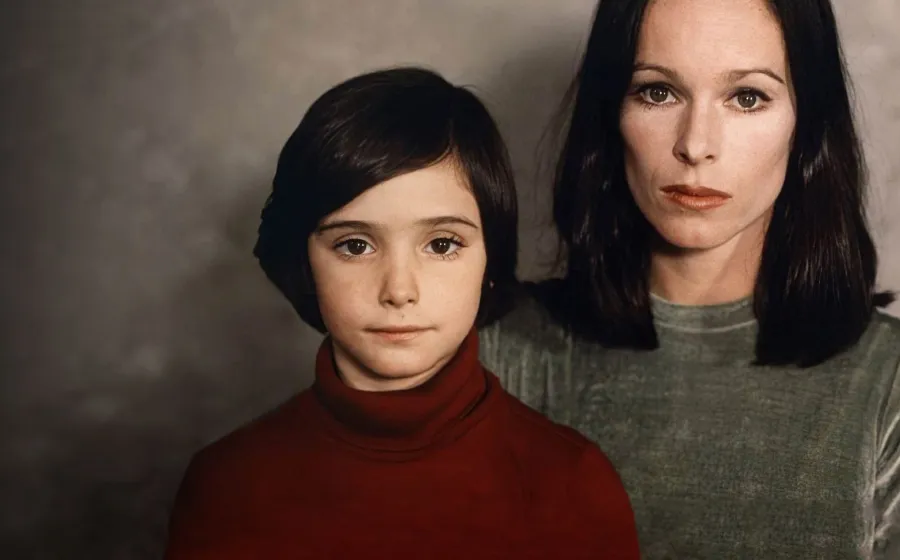
Is the love of cinema a persistence of childhood? Starting from this question, writer Marta Sanz proposes a journey through four films that explore intimacy, memory, the body and vulnerability from very different perspectives. From the sharp classicism of Eva al desnudo (Joseph L. Mankiewicz, USA, 1950) to the contemporary physicality of Creatura (Elena Martín Gimeno, Spain, 2023), passing through the wounded childhood of Cría cuervos (Carlos Saura, Spain, 1975), and the creative excess of All That Jazz (Bob Fosse, USA, 1979), which will be screened with a preceding lecture by Marta Sanz.
Carte blanche to José Luis Pardo: blank pages
Hegel once said that happiness has written only blank pages in History. From this statement, philosopher and essayist José Luis Pardo reflects on the representation of happiness in cinema as promise, social mandate and philosophical problem. His selection brings together different forms of imposed, desired or impossible happiness. Screenings begin on Tuesday the 10th with the classic musical Vampiresas 1933 (Mervyn LeRoy, USA, 1933), and continue until Saturday the 14th with Chaplin’s modern irony in Tiempos modernos (USA, 1936), the sophisticated comedy Historias de Filadelfia (George Cukor, USA, 1940), and Medvedkin’s political humour in La felicidad (Russia, 1935).
Carte blanche to Ernesto Castro: naturally artificial. How do images ferment?
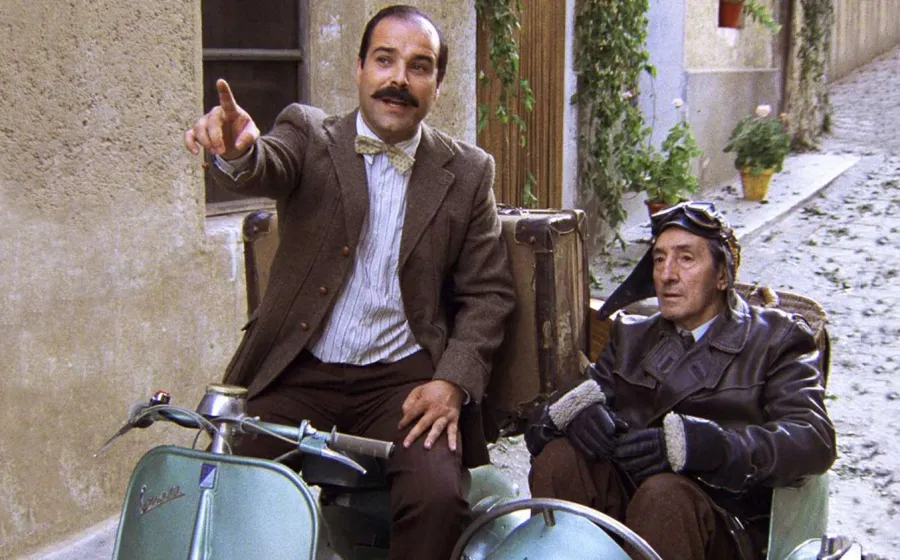
Writer Ernesto Castro proposes a journey through films that reflect on how cinema produces meaning, belief and community. From the free and material gaze of Agnès Varda in Los espigadores y la espigadora (France, 2000) to Orson Welles’s play of masks in Fraude (France–Iran–Germany, 1973), and from the mysticism of Stalker (Andréi Tarkovski, Russia, 1979) to the metaphysical comedy Amanece, que no es poco (José Luis Cuerda, Spain, 1989), the cycle reflects on images as living organisms, capable of fermenting ideas and affects. The Friday 20 session will be preceded by a lecture by Ernesto Castro.
José Luis Guerin Retrospective: the right image
Coinciding with the release of Historias del buen valle, Cineteca Madrid presents, from 1 to 27 February, a retrospective of José Luis Guerin, one of the most singular filmmakers in contemporary European cinema. Since the 1980s, his work has explored the boundary between documentary and fiction, memory work, patient observation and the poetry of everyday life.
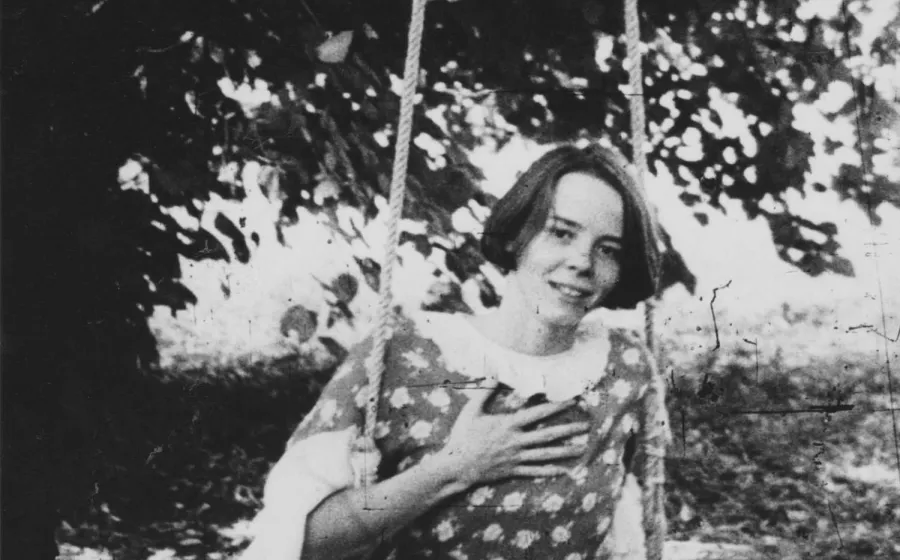
The retrospective includes key titles such as Innisfree (Spain, 1990), Tren de sombras (Spain, 1997), En construcción (Spain, 2000) and En la ciudad de Sylvia (Spain–France, 2007), alongside short works, film correspondences and recent pieces that reveal a coherent and deeply ethical practice.
‘The ground trembles beneath our feet’. The cinema of Japan’s Director’s Company
In collaboration with the Japan Foundation and the mediadistancia collective, Cineteca presents, from 24 to 28 February, a cycle dedicated to the Director’s Company, one of the most radical and singular experiments in Japanese cinema of the 1980s. Founded in a context of industrial crisis, the company enabled a generation of young filmmakers to produce personal and risky films outside the major studios. From this experience emerged the early works of Kiyoshi Kurosawa, Shinji Somai, Toshiharu Ikeda and Gakuryu Ishii.
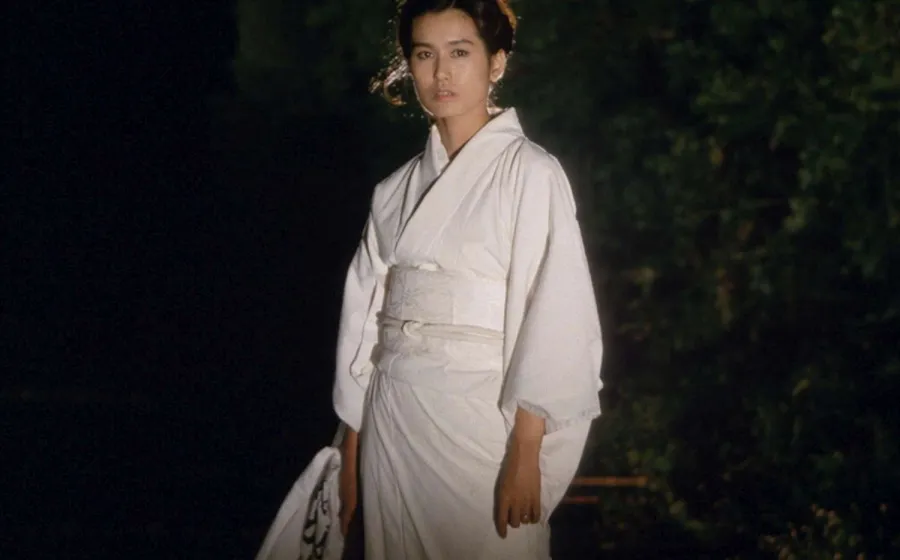
The films combine satire, violence, melodrama and social critique of contemporary Japan. The selection includes Mermaid Legend (Toshiharu Ikeda, Japan, 1984), Bumpkin Soup (Kiyoshi Kurosawa, Japan, 1985), Door (Banmei Takahashi, Japan, 1988), Door II: Tokyo Diary (Banmei Takahashi, Japan, 1991) and The Crazy Family (Gakuryu Ishii, Japan, 1984). All sessions will be introduced by Fidel Ojea, critic and Japanese cinema specialist from the mediadistancia collective.
The magic of cinema
In collaboration with the Madrid International Magic Festival, this programme proposes, from 6 to 8 February, a dialogue between cinema and illusionism as kindred languages. Through three films and a talk with magicians Jandro and Jorge Blass, the programme reflects on how the principles of magic (deception, surprise, misdirection) are applied to cinematic language. An Honest Liar (Tyler Measom, Justin Weinstein, USA, 2014), El increíble Burt Wonderstone (Don Scardino, USA, 2013) and El ilusionista (Sylvain Chomet, France–UK, 2010) make up the selection.
Special screening in tribute to José Luis Cienfuegos (1964–2025)
Cineteca pays tribute to José Luis Cienfuegos, a key figure in Spanish cinephilia and director of some of the country’s most important film festivals. Beyond the films he programmed, his legacy lies in a way of understanding love for cinema as rigorous passion, attentive listening and commitment to discovery. Happiness (USA, 1998) by Todd Solondz, one of the filmmakers Cienfuegos helped introduce to Spain, will be screened as a gesture of gratitude and remembrance on Thursday, 5 February.
Cinezeta: roses are red, and February is too
Against the normative romantic narrative of Valentine’s Day, Cinezeta proposes an alternative February, shaped by desire, discomfort and contradiction. Three films explore twisted, violent or censored forms of love, far removed from the commercial ideal.
Cineteca for Families: three journeys to Wonderland
The month concludes with a family programme for Sunday matinees on the 1st, 15th and 22nd, dedicated to Alicia en el país de las maravillas, one of the most adapted and unstable stories in cinema history. Through three versions — Disney’s classic animation, Jan Švankmajer’s radical interpretation and Tim Burton’s contemporary fantasy — the cycle shows how the same story can become a fairy tale, a nightmare or an adventure, and how cinema reshapes our relationship with imagination, childhood and freedom.
Confesionario: animation, premieres, special screenings and regular sections
The monthly Confesionario session brings together five films spanning seventy years of history. In addition, this month Cineteca’s premieres section will screen Dios lo ve, Eloy de la Iglesia. Adicto al cine, Emergency Exit, Father Mother Sister Brother, Queer Me and Vivir al revés. February’s programme is rounded out by Cineteca’s regular sections, including Relatos del ruido Chapter XXVIII: Sueños sonoros (dreamlike music); Ciclo DOCMA, presenting Al oeste, en Zapata; Así son las cosas; CIMA en corto with Un lugar al que llamar (Correspondencias íntimas); La noche Z; and Imprescindibles de TVE with the documentary Las gafas by Isabel Coixet.
More information and contact:
comunicacion@mataderomadrid.org