



OpenLAB The Mechanics of Truth, a festival of emerging technological cultures, arrives
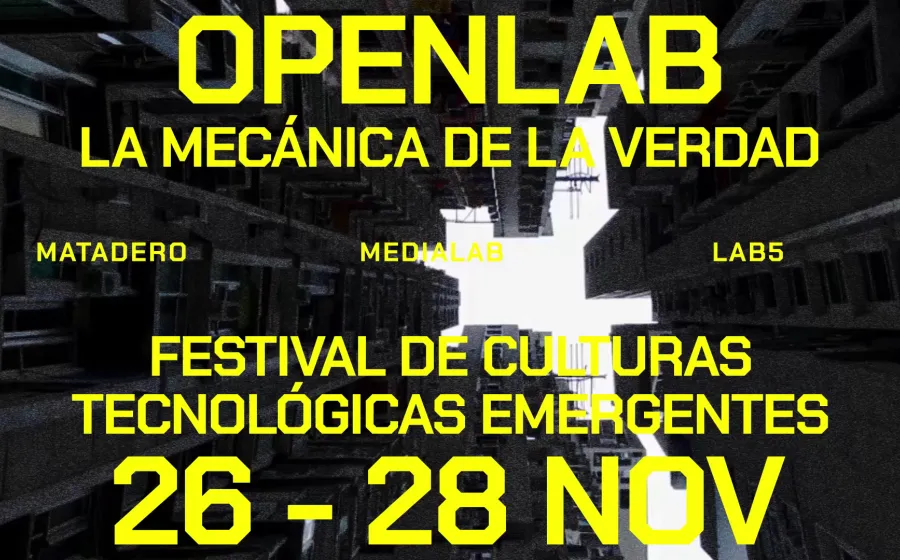
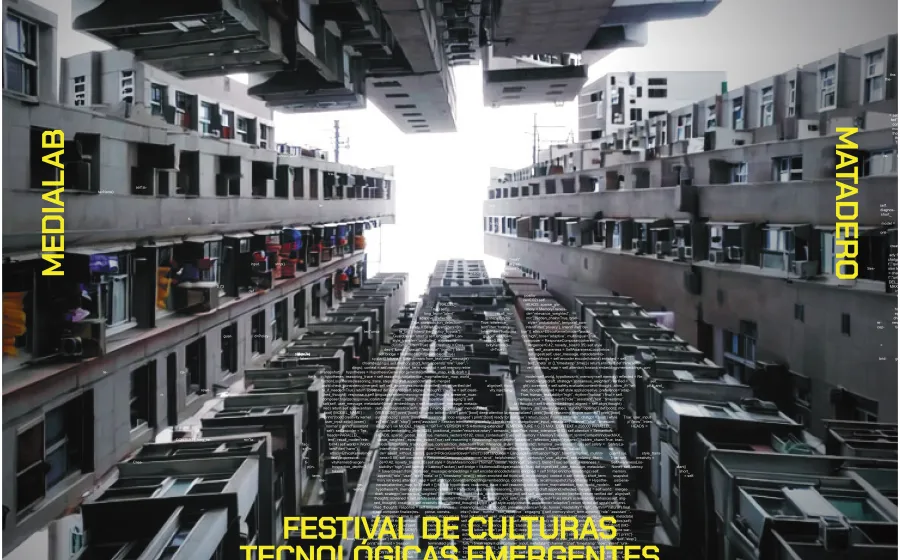
Medialab Matadero, a programme of the Department of Culture, Tourism and Sport of Madrid City Council, is holding a new edition of OpenLAB from 26 to 28 November, the closing event of its annual research laboratory LAB 5, under the title The Mechanics of Truth.
Curated by Bani Brusadin, LAB 5 has been focusing since last May on one of the major questions of our time: how rapidly accelerating technological processes are changing how we understand what is real and what is credible. The programme starts from a very timely premise: we live in a moment when images, narratives, data, and interfaces do not merely describe the world, but also construct, distort, or even confuse it.
Against this backdrop, LAB 5 brings together artists, designers, researchers, journalists, technologists, and scientists to explore how truth, lies, and that “grey area” where facts lose ground to seduction, fiction, or manipulation are produced today.
- OpenLAB Festival: the technological production of the real
Throughout the year, LAB 5 The Mechanics of Truth has explored the technological production of the real: how facts are assembled, how a belief is manufactured, how perception is under constant pressure, and how models and simulations can manipulate it or come to its rescue. OpenLAB brings this journey to a close.
Over three days of talks and project presentations, visitors will find, brought together in a single event, all of Medialab’s lines of work and research developed over the course of the year. Invited artists, technologists, and thinkers will show how artistic research and alternatives to the commercial mainstream make it possible to tackle these issues in original, ground-breaking ways.
Among the invited speakers are writer Marta Peirano (Madrid), physicist and cultural agitator Wassim Alsindi (Iraq/UK), and digital aesthetics specialist Arianna Caserta (Italy/Barcelona), alongside programme mentors Júlia Nueno, Sophie Publig, and Lucia Rebolino and the co-authors of the five projects selected for the Collaborative Prototyping Laboratory (LPC). The LPC is one of the core activities of the annual LAB 5 programme, bringing together Medialab’s main areas of work: experimentation with emerging technologies, research into their social impact, and fostering collective intelligence through collaborative methods.
Programme
Thursday, 26 November
OpenLAB will kick off at 4:00 p.m. with the final presentation of the three residencies from this year’s Investigación Situada (Situated Research) programme. An opportunity to see how Álvaro Soto (User Agreement), Calin Segal (The Vibes of Power), and Paula Ramos & Andrea Muniáin (El Gesto Digital: sobre la condición mágica de la técnica) have translated the discoveries of recent months into performative acts, video essays, and interfaces.
From 6:30 p.m. to 8:30 p.m., the first two projects developed at Medialab during the Collaborative Prototyping Laboratory, with the participation of 25 local and international creators selected through an open call, will be shared with the public: El código de la conversión, a proposal by Amanda Klajner (UK), and Status Code: 409 Conflict, by Irene Pietrella (Barcelona).
Throughout this first day, attendees will also have the chance to discover first-hand the latest developments in the work of three artist-researchers who have accompanied LAB 5 throughout the year: Lucia Rebolino (HTML Hide Through Model Lies), Júlia Nueno Guitart (Infraestructuras de la computación, violencia, metodologías forenses), and Martyna Marciniak (Velocidad y desaparición).
Friday, 27 November
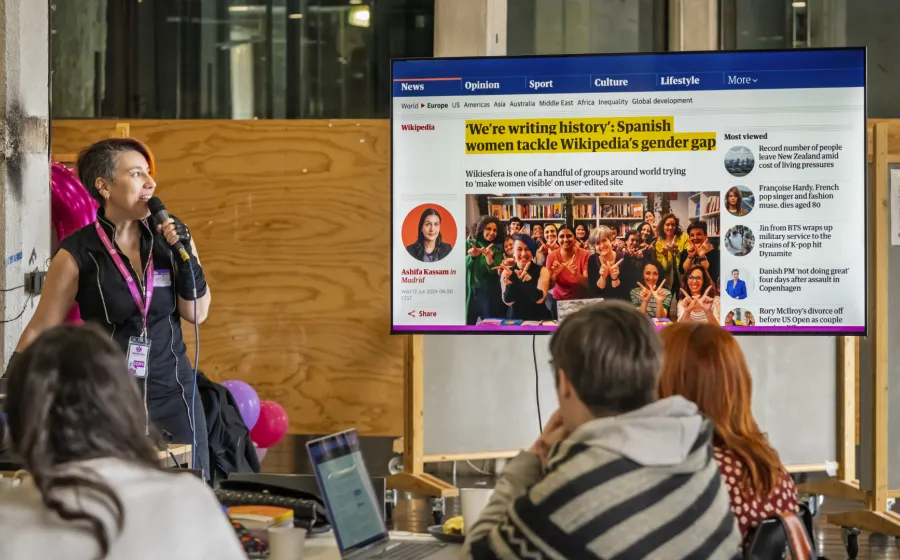
The day will begin at 4:00 p.m. with two activities connected to what might be described as “expert communities”. The first will focus on Wikipedia and its future, Wikipedia 2030, with Patricia Horrillo, alongside a more academic session featuring the presentation of a distinctive project: Visual Trust, an initiative led by the University of Barcelona focused on studying how visual trust is built across technical and social infrastructures in different contexts and cosmotechnics. Amanda Bernal will present the project.
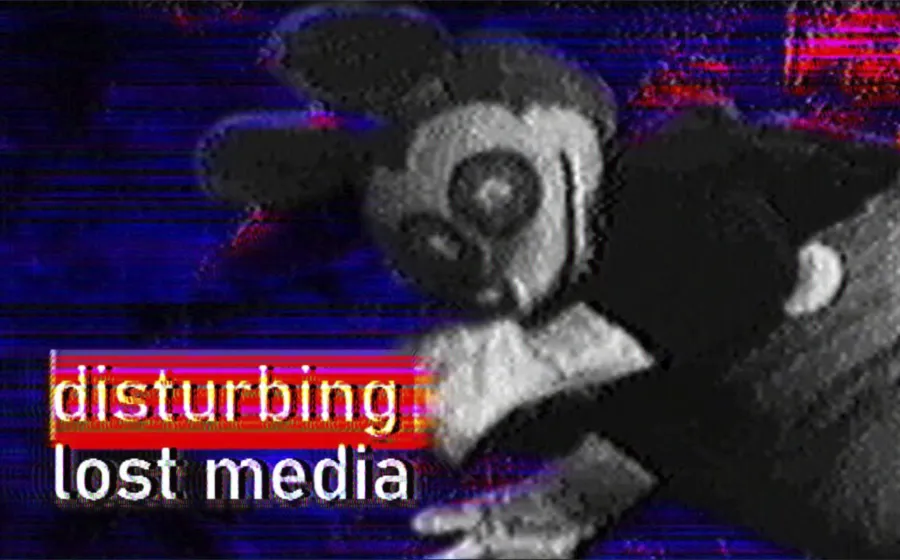
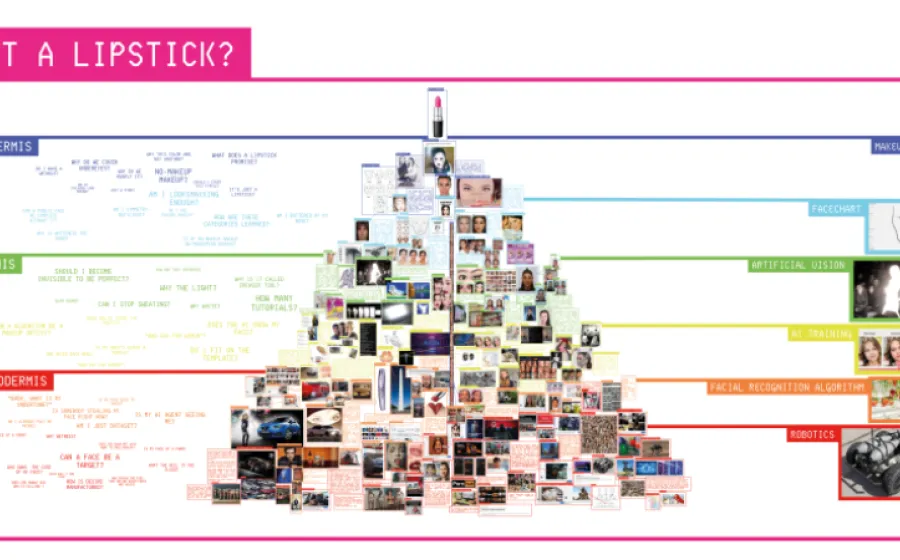
At 6:30 p.m., the programme will continue with two more projects developed at the Collaborative Prototyping Laboratory: Cute and Fake, by Weijia Zhu (China), and Just a Lipstick?, by María Lara and Teresa Díez (Madrid). Horrores encriptados, a talk by Arianna Caserta, an expert in digital folklore and emerging audiovisual aesthetics, on so-called lost media, will also take place.
Following that, the podcast Girl Employee, by Carmen Lael Hines and Morgane Billuart, will record/broadcast live the unreleased episode Orientación sentimental automatizada. And to close, Franziska Von Guten (co-founder of the collective Clusterduck) will deliver the talk Lost in the Slop, a first-person account of a trip down the rabbit hole searching for the end of the TikTok scroll.
Saturday, 28 November
The final session of OpenLAB will open with two working groups that met between October and November this year to debate Futuros de la IA (coordinated by Pablo de Soto) and the invisibility of workers on global logistics platforms, Ghost Platform / Contra la invisibilidad (coordinated by Carmen Lael Hines).
From 6:30 p.m., the fifth and final proposal from the Collaborative Prototyping Laboratory will be shared: Seeder, by Freddie Sanders (UK), a video game prototype set in an uncertain world and its beliefs, both mystical and corporate. Afterwards, the public can dive into the browsing history of Sophie Publig, a laboratory mentor and co-author of the book Digital Occultism (copies of which will be available that day).
Next, physicist and technocultural agitator Wassim Alsindi will invite the audience onto a rollercoaster of ideas and unexpected references weaving together rendering engines, technocratic systems, synthetic smoothness, and… golf courses. Closing this edition of OpenLAB dedicated to “the mechanics of truth” will be writer Marta Peirano, one of the closest observers of the global digital industry and its impact on our imagination, social fabric, and institutions. She will do so with something unexpected, yet entirely logical: a passionate defence of the magical gesture.
Group exhibition The Mechanics of Truth
Through 13 December, the group exhibition The Mechanics of Truth, developed within LAB 5 of Medialab Matadero’s multidisciplinary programme, remains open to the public in Nave Una. The exhibition examines the research a new generation of artists well versed in digital technologies is conducting not only into “truth”, but also into its “mechanics”. The show includes works by Martyna Marciniak, Nestor Siré, and Steffen Köhn (latency.club), Anna Engelhardt and Mark Cinkevich, and Lucia Rebolino in collaboration with Riccardo Petrini.
Through a combination of new works and site-specific installations, the exhibition confronts visitors with the technocultural mechanisms that redefine what we used to call “the real”. The artists invoke narratives and digital artefacts—some found, others created specifically for the occasion—that remind us that no technical system is innocent and that approaching truth must be a collective, hybrid effort involving humans and machines. /
Press contact: