
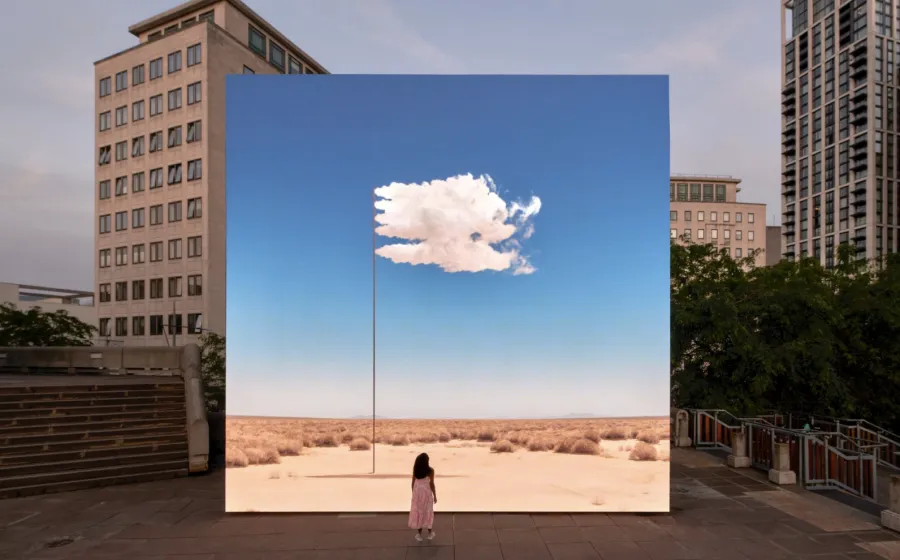
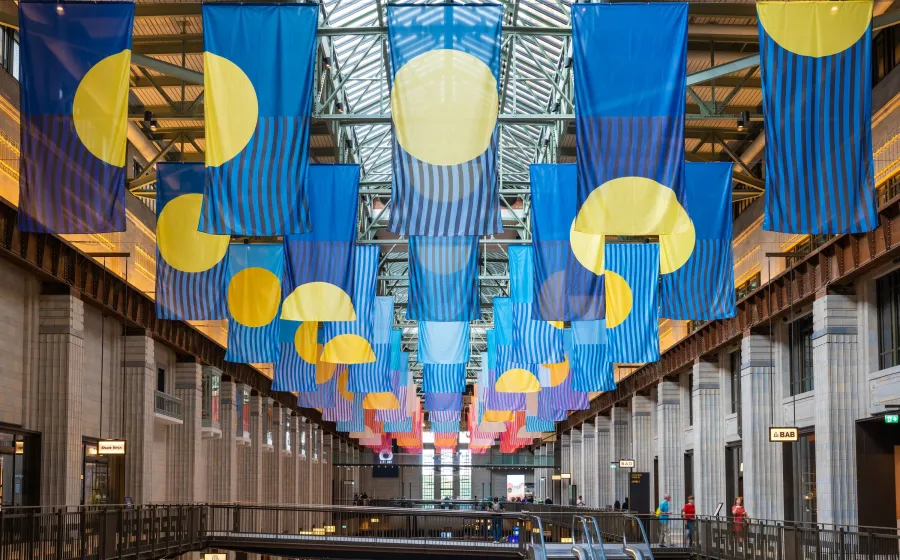
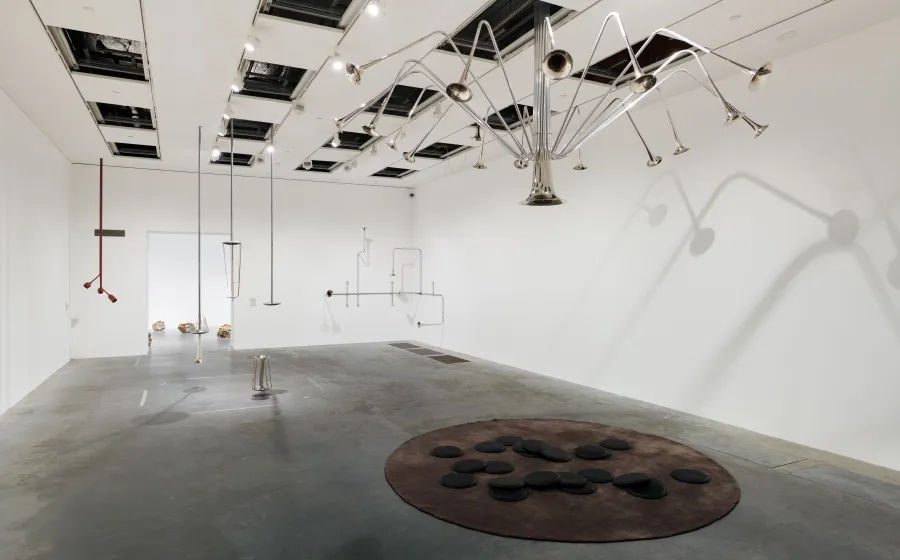
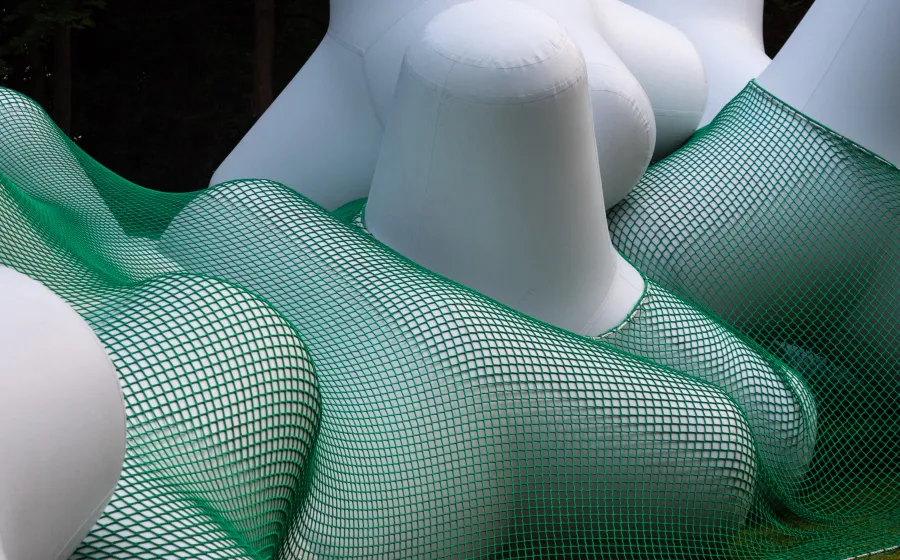
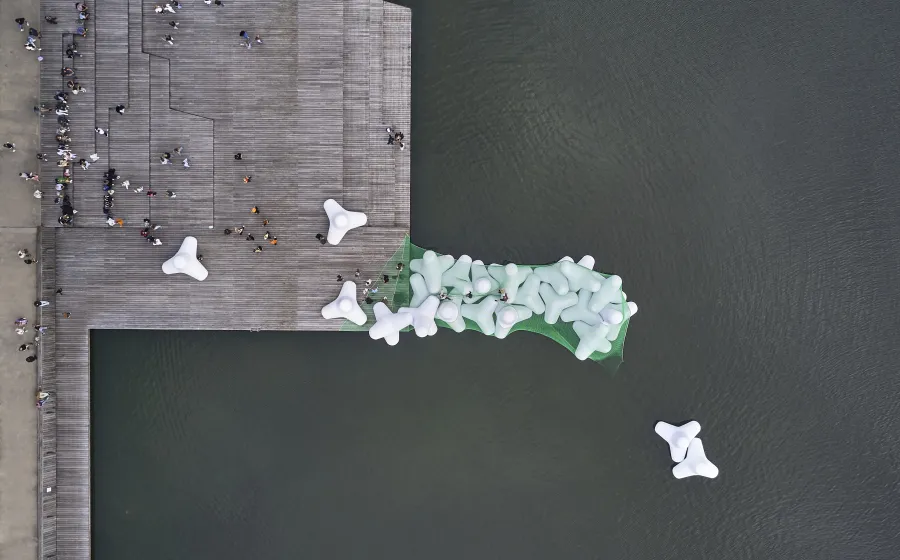
Matadero Madrid hosts ‘(Super)Models’, the central exhibition of Mayrit, the Madrid Design and Architecture Biennial
- The exhibition gathers 12 international artists and collectives, featuring installations, video, painting, and performance in dialogue with algorithmic, economic, and social systems.
- Curated by Eduarda Neves and Mohammad Salemy, the proposal explores how ‘supermodels’ mediate the complexity of the current world through art, architecture, and design.
Matadero Madrid, the contemporary creation center of the Department of Culture, Tourism and Sport, will host the exhibition (Super)Models in Nave Una from April 30 to June 21, serving as the central axis of the 4th edition of Mayrit, the Madrid Design and Architecture Biennial. Organized by Intermediae Matadero and Mayrit, the exhibition invites reflection on the often-invisible systems that organize our lives and shape our understanding of the contemporary world.
Curated by Eduarda Neves and Mohammad Salemy, (Super)Models begins with the concept of the model—derived from the Latin modulus, meaning "measure"—as a tool to simplify, represent, and manage reality. Today, these models have evolved into ‘supermodels’: systems that do not merely describe the world but actively contribute to producing it.
From the algorithms that determine what we see on the internet to the economic and urban structures we inhabit, supermodels assist us in decision-making while simultaneously limiting what is possible. Their increasing scale and opacity can reinforce dynamics of normalization, exclusion, and predictability. In response, the exhibition establishes a field of inquiry that explores their potential to imagine critical alternatives.
An international journey through contemporary practices
The exhibition brings together international artists and collectives whose practices address models as aesthetic, political, and epistemological devices. Participating artists include Adad Hannah (USA), Adrià Julià (Spain), Lúcia Prancha (Portugal), Hugo Canoilas (Portugal), Ece Canli (Turkey), Babak Golkar (USA/Canada), Attila Richard Luckas (Canada), Daniel Hölzl (Austria), Abie Franklin (Israel), John Gerrard (Ireland), Abbas Zahedi (UK), and the POoR Collective (UK).
Through a diversity of formats—installations, experimental film, painting, sound, and performance—the works examine issues such as the dematerialization of the economy, algorithmic replication, the construction of identities, and the relationship between memory, representation, and power.
Among the standout proposals is Symphony for an Economy of Extinction (2026) by Adrià Julià, an installation analyzing how certain seemingly immaterial economic models can operate undemocratically, using marginalization as a mechanism for accumulating wealth and power while tracing the origins of irrationality in the representation of money. The work unfolds through a set of interrelated pieces, such as Another Fortuitous Encounter, where a suspended printer randomly generates images from an American traveler's check; The Spinning of the World, a 16mm film loop showing the infinite rotation of a coin; and Fables for an Animal Economy, an installation based on the fictional architecture found on a 500-euro banknote.
Also featured is Fauxsimile by Ece Canli, a performance exploring the violence of repetition in algorithmic systems; Three Days or Thirty Thousand Years by Hugo Canoilas, which proposes new forms of attention through time and the moving image; and Sellers (Goebbels) by Babak Golkar, an installation connecting historical propaganda strategies with modern persuasive techniques in consumer culture through an anamorphic portrait of Joseph Goebbels.
Models, power, and the production of reality
The curatorial framework of (Super)Models is situated in a context marked by techno-capitalism, automation, and an increasing reliance on artificial intelligence for decision-making. In this scenario, models operate as invisible infrastructures that structure both daily life and major geopolitical transformations.
The exhibition proposes a non-dichotomous reading of these systems, understanding them simultaneously as tools for emancipation and as disciplinary mechanisms. This approach suggests what the curators call "floating fields": spaces where possibility and limitation coexist.
Mayrit 2026: A laboratory distributed across the city
(Super)Models is part of the Mayrit 2026 program, a biennial that transforms Madrid into a laboratory for contemporary practices through exhibitions, conferences, performances, and workshops distributed across multiple venues. Its objective is to position the city as an international node for critical thinking regarding design, architecture, and contemporary art.
The 2026 edition uses models as a conceptual axis to address some of the most urgent issues of the present—from the role of algorithmic systems and artificial intelligence in modeling reality and its social, material, and economic implications, to global political and economic transformations.
The exhibition is held in collaboration with institutions including the British Council, Batalha Centro de Cinema, New Centre for Research & Practice, Goethe Institut, CEAA Centro de Estudos Arnaldo Araújo, and Escola Superior Artística do Porto. Mayrit also acknowledges the special collaboration of ACME Estudio in the production and installation of the exhibition, and Resucitadero for the donation of objects for Adad Hannah’s work.
(Super)Models invites us to rethink the systems that organize our contemporary experience, proposing a space for analysis and experimentation where models cease to be mere tools and become objects of study, critique, and transformation.
Eduarda Neves and Mohammad Salemy
The exhibition is curated by Mohammad Salemy (Iran/Canada) and Eduarda Neves (Portugal), whose careers bridge artistic practice, critical thought, and curatorial experimentation. Salemy, an artist, critic, and independent curator based in Berlin, has developed a practice focused on algorithmic epistemology, digital culture, and knowledge infrastructures; he is also a co-founder of The New Centre for Research & Practice. Neves, a Doctor of Aesthetics and independent curator, situates her research at the intersection of art, philosophy, and politics, with an extensive international background in curation, critical writing, and institutional development in the field of contemporary art.
In recent years, Matadero Madrid’s Intermediae program has focused part of its work on analyzing and reimagining urban and inhabited environments from a transversal perspective that integrates architecture, the right to the city, and participatory design, while fostering sustained actions to strengthen Madrid’s cultural fabric in collaboration with local agents. Its collaboration with the Mayrit 2026 Biennial addresses both lines of work.