
Ülo Pikkov: Objetos contra el olvido
Date
Venue
Category
Format
Institution
A través de las posibilidades de la animación documental y mediante objetos reales, materiales artesanales y recuerdos personales, Ülo Pikkov reconstruye las huellas de la memoria entre traumas colectivos y pérdidas íntimas, creando auténticas cápsulas del tiempo. / Through the possibilities of documentary animation and the use of real objects, handcrafted materials and personal memories, Ülo Pikkov explores the imprints of memory, weaving together collective trauma and intimate loss to create veritable time capsules.
Programa:
Sewing Machine (Õmblusmasin) (Ülo Pikkov | Estonia, 2024, 17')
El destino de su bisabuela sirve a Pikkov para evocar la historia de Petseri, marcada por la violencia bolchevique y la Guerra de Independencia de Estonia. Entre las primeras imágenes filmadas de la ciudad por un voluntario danés, quizá también perdura su figura. / The fate of his great-grandmother serves as a starting point for Pikkov to evoke the history of Petseri, marked by Bolshevik violence and the Estonian War of Independence. Her presence may also linger among the earliest footage ever filmed of the town, shot by a Danish volunteer.
Body Memory (Keha mälu) (Ülo Pikkov | Estonia, 2011, 9')
Durante las deportaciones soviéticas de 1949, un manzano presencia cómo los compañeros de clase del padre del director desaparecen rumbo a Siberia. A través de la animación stop-motion, el árbol dibuja los recuerdos del terror, el miedo y la crueldad que permanecen inscritos en la memoria colectiva. / During the Soviet deportations of 1949, an apple tree witnesses the disappearance of the director's father's classmates as they are sent off to Siberia. Through stop-motion animation, the tree traces memories of terror, fear and cruelty that remain etched in the collective memory.
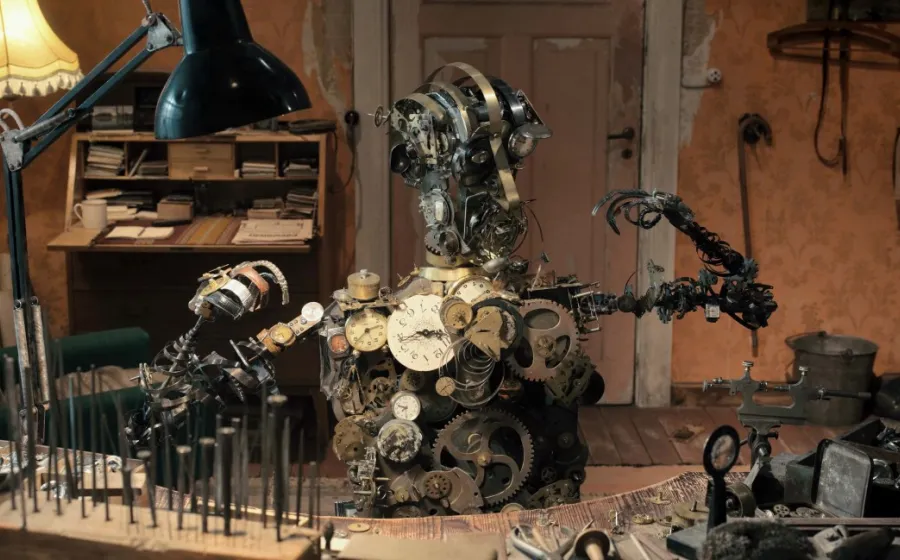
Tik-Tak (Ülo Pikkov | Estonia, 2014, 10')
En un taller de relojería de Tallin destruido durante la Segunda Guerra Mundial, un relojero y un ratón emprenden una persecución que se convierte en una carrera contra el tiempo. Recuperando los relojes originales del edificio, Pikkov reflexiona sobre el paso de la vida, la inevitabilidad de la muerte y el deseo de alcanzar la eternidad. / In a Tallinn clockmaker's workshop destroyed during the Second World War, a watchmaker and a mouse embark on a chase that turns into a race against time. Using the original clocks recovered from the building, Pikkov reflects on the passage of life, the inevitability of death and the desire to attain eternity.
The Tortoise and the Hare (Kilpkonn ja jänes) (Ülo Pikkov | Estonia, 2020, 9’)
Los viajes en coche para acompañar a su madre enferma al tratamiento se convierten para el autor en un registro de momentos cotidianos que acabarán siendo recuerdos. Inspirada en la fábula de la liebre y la tortuga, la película reflexiona sobre el tiempo, la muerte y la despedida. / Car journeys accompanying his ailing mother to her medical treatments become, for the filmmaker, a record of everyday moments that will eventually turn into memories. Inspired by the fable of the tortoise and the hare, the film reflects on time, death and the pain of parting.
’Til We Meet Again (Taaskohtumine) (Ülo Pikkov | Estonia, 2021, 14’)
Tras la evacuación de Ruhnu durante la Segunda Guerra Mundial, algunos de sus antiguos habitantes regresan a la isla en busca de los vestigios de sus vidas pasadas. Piedras, plumas y casas supervivientes reconstruyen una memoria frágil, animada con materiales recogidos de la propia naturaleza. / Following the evacuation of Ruhnu during the Second World War, some of the island's former inhabitants return in search of traces of their past lives. Stones, feathers and surviving houses piece together a fragile memory, brought to life through animation using materials gathered from nature itself.
Empty Space (Tühi ruum) (Ülo Pikkov | Estonia, 2016, 11’)
Una niña juega con los muebles en miniatura de una casa mientras la luz entra por las ventanas. Tras esta escena cotidiana se esconde una historia de ausencia: durante la ocupación soviética, su padre pasó diez años oculto en el sótano familiar. Al salir, le regaló una réplica de su hogar, pero ya era demasiado tarde para recuperar su infancia. / A little girl plays with miniature furniture in a house as sunlight streams through the windows. Behind this seemingly everyday scene lies a story of absence: during the Soviet occupation, her father spent ten years hiding in the family cellar. When he finally emerged, he gave her a replica of their home, but it was already too late to reclaim her childhood.
> Sesión no recomendada para menores de 18 años.