



Cineteca Madrid celebrates Art Week with a special program exploring contemporary artistic practices
- March will see the Madrid premiere of Albert Serra’s latest work, fe sense obres morta és, an immersion into the universe of Antoni Tàpies.
- Video art and performance pioneer Paul McCarthy will attend a special session featuring two of his films.
- Visual artist Sally Gutiérrez Dewar curates a session around her short film Application, in dialogue with works by Sandra Schäfer and Mario Espliego.
- Singer María Salgado will give a recital before the screening of Vía Versus, the audiovisual piece she created with Clarisa Navas.
- Researchers Estrella de Diego and Germán Labrador will be given carte blanche to explore the artistic avant-garde and historical memory from unconventional perspectives.
- Cineteca Madrid hosts a retrospective dedicated to Anja Breien, one of the most prominent figures in Norwegian cinema.
On the occasion of Art Week at Matadero Madrid (March 2–8), Cineteca Madrid, part of the Department of Culture, Tourism and Sport, becomes a meeting point between film and art throughout the month. Conceived as a laboratory, the program brings together screenings, premieres, carte blanche series, and encounters with artists who explore contemporary practices around matter, the body, the voice, the archive, landscape, and language.
Art Week: The Intersection of Cinema, Visual Arts, Poetry, and Performance
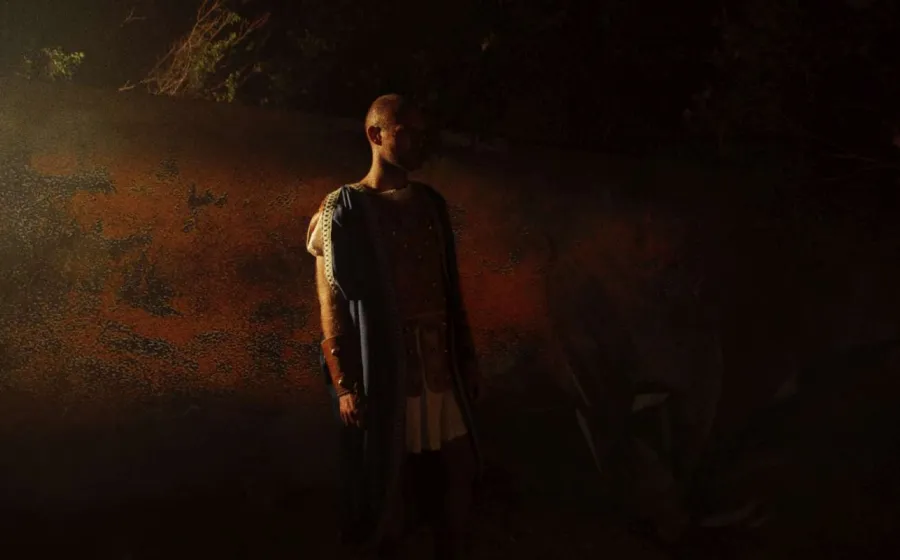
The program opens on March 3 with the Madrid premiere of fe sense obres morta és, Albert Serra’s latest work, a radical immersion into the material, symbolic, and spiritual universe of Antoni Tàpies. Far from a biographical portrait, the film creates a sensory and philosophical experience that engages with the artist’s work from an autonomous, provocative, and contemporary perspective.
In collaboration with the SOLO Collection, an international project supporting artistic creation founded by Ana Gervás and David Cantolla, a special session will be presented on Wednesday, March 4, featuring the films A&E, Adolf & Eva / Adam & Eve, Cooking Show, Kitchen and A&E, Adolf & Eva / Adam & Eve, Mother, with the presence of their author, Paul McCarthy. This pioneer of video art, together with actress Lilith Stangenberg, explores identity, power, and desire, combining performance, drawing, and filmmaking in a live experience that challenges the conventions of art and spectacle. In dialogue with the exhibition A&E, which features McCarthy’s large-format drawings, the event forms part of a multidisciplinary performative project.
Art Week also includes, on Thursday, March 5, With a Little Help from My Friends, a session curated by Sally Gutiérrez Dewar that connects one of her recent works with pieces by Sandra Schäfer and Mario Espliego. The program proposes a fleeting encounter between images, geographies, and diverse sensibilities.
The program concludes on March 6 with Vía Versus, an audiovisual piece created jointly by María Salgado and Clarisa Navas, filmed between northeastern Argentina and Galicia. Drawing on the languages, histories, and ways of life of both territories, the work investigates what has been silenced by processes of repression and forgetting. More sensory than discursive, the piece is conceived as a shared journey toward a common space yet to be defined. The session will be preceded by a recital by María Salgado.
Carte Blanche to Estrella de Diego: Bodies, Machines, Visions
Researcher and writer Estrella de Diego proposes, on March 3, 4, and 5, a journey through the artistic avant-garde understood as a radical experience of seeing.
From early surrealist and abstract avant-gardes such as Un perro andaluz (Luis Buñuel, France, 1929) to the filming of the creative act in El misterio de Picasso (Henri-Georges Clouzot, France, 1956), the selection traces a genealogy of cinema as a testing ground. The program culminates on Thursday, March 5, with a session dedicated to Maya Deren and Yvonne Rainer, preceded by a lecture by Estrella de Diego, where cinema intersects with dance, choreography, and feminist thought.
Carte Blanche to Germán Labrador: The Living, Demons, The Possessed
Researcher and curator Germán Labrador proposes, on March 10, 11, and 12, a journey through Spanish cinema shaped by psychotronics, historical memory, and extreme forms of experience. Far from an illustrative reading of the past, the program understands images as spaces of possession, trance, and survival, where the political seeps through the body, desire, and wounded childhood.
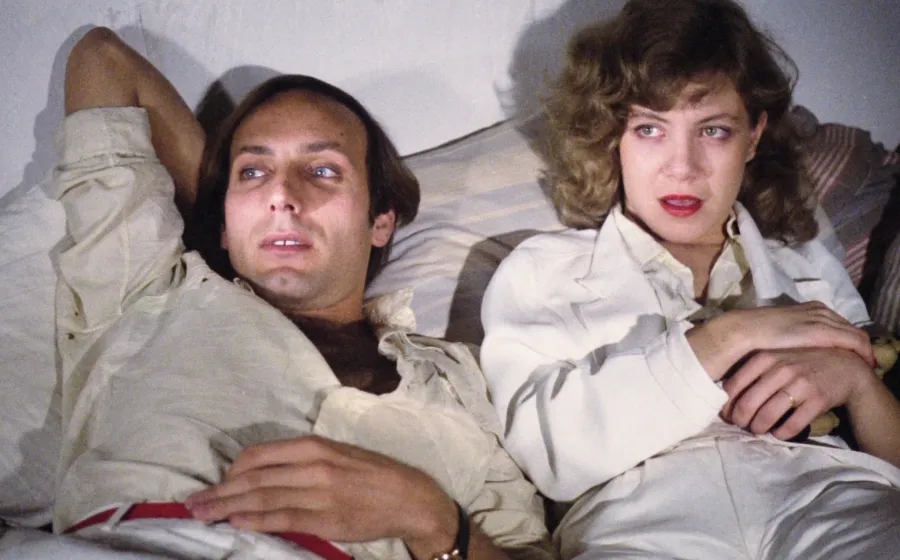
From the violence of Viva la muerte (Fernando Arrabal, France–Tunisia, 1971), where the Civil War is experienced as the beginning and education of fanaticism, to Demonios en el jardín (Manuel Gutiérrez Aragón, Spain, 1982), where the Francoist postwar period appears as a domestic landscape, and Arrebato (Iván Zulueta, Spain, 1979), an emblem of a cinema that conceives the image as a vampiric force, Labrador will bring together these perspectives in the lecture he will give on Wednesday, March 11.
Comic Fair
Cineteca Madrid joins the Comic Fair at Matadero Madrid, taking place from March 26 to 29, with a program that explores the links between cinema and comics through sessions aimed at both young audiences and adults. The sessions combine historical and contemporary perspectives on the relationship between the comic panel and the screen, from cinema’s pop and genre appropriation of comics — with titles such as Batman: The Movie (March 1), El príncipe valiente (March 8), and Danger: Diabolik (March 29) — to more intimate and current approaches such as Falcon Lake. The complete screening of the series Samuel (March 26), with the presence of its creator Émilie Tronche, and the premiere of Aquí donde estoy (March 27–31), including a presentation and talk with its creators, are also part of the program.
Anja Breien: Genres in Flight
From March 15 to 25, Cineteca Madrid presents a retrospective dedicated to filmmaker Anja Breien, one of the most prominent figures in Norwegian cinema. Born in Oslo in 1940, she belongs, alongside Vibeke Løkkeberg and Laila Mikkelsen, to the generation that shaped the female face of the Norwegian New Wave. The retrospective brings together her first six feature films, recently digitized by the National Library of Norway, representing the most dynamic period of her career.
Tatiana Mazú: Burn It All
The work of Argentine filmmaker Tatiana Mazú inhabits a space of friction between cinema, memory, and political violence. Her films question the ways power inscribes itself on bodies, landscapes, and family narratives, shifting the idea of the document toward a critical and sensory experience.
Far from an illustrative approach, her cinema works with remnants, silences, and traces, where official history falters or breaks down. This retrospective revisits her three key films, Caperucita roja (March 26), Río Turbio (March 27), and the premiere of Todo documento de civilización (March 28–31).
More information and contact:
comunicacion@mataderomadrid.org
← Go back to press