
Moving the Invisible: Ecopolitical Imagination Circle

Reduced mobility
For adult audiences
Accessible restroom available
Date
Venue
Price
Free admission
Category
Format
Institution
Programme
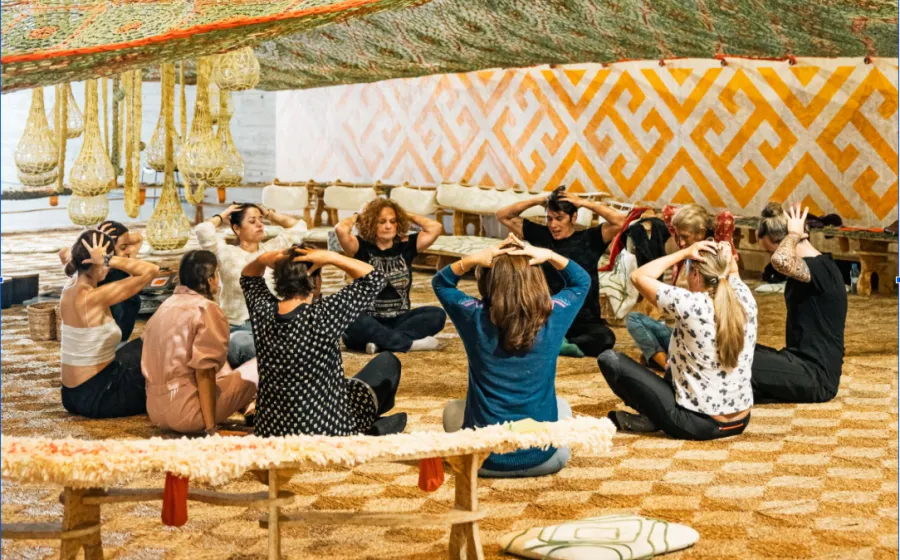
Pablo Zamorano leads the workshop Moving the Invisible, which invites participants to develop practices of listening, movement, and perception around the waters of the Manzanares River. The session offers exercises in creative writing, somatic listening, and bodily grounding to explore how the sensory, material, symbolic, and ecological qualities of the territory can resonate in our bodies and become material for movement, voice, and sound. The aim is to play with ways of dialogue and translation between the human body and the body-territory, seeking other ways to listen, move, breathe, name, and bring to life the lives, memories, and relationships inhabiting the space between the river, the waters, and our bodies. Please bring comfortable clothing and a notebook.
The Ecopolitical Imagination Circle is a space created by Juan Pablo Pacheco to experiment with the political and aesthetic representation of the relationships that sustain territories and ecosystems as subjects of rights. The opening sessions propose creating affective cartographies of the Manzanares River in search of its voice and body.
Bio
Pablo Zamorano (Chile) & Juan Pablo Pacheco (Colombia) are artists and researchers whose collaborative practice explores the relationships between territory, memory, body, and multispecies ecologies. Through participatory processes rooted in live arts, visual arts, sound, and listening, they develop projects that investigate the ontologies of nature and infrastructures, poetic forms of knowledge, contemporary rituality, and embodied memory, weaving together the sensory, the political, and the ecological.